

In the first part of our guide, we covered grinding disc basics: definition, structure, core materials, and main types. Now, we’ll dive deeper into key performance factors (grit size, grade, bond types), compare grinding and flap discs, explain how grinding discs work, share selection tips, and outline critical speed, pressure, and safety guidelines.
5. Grits, Grades, and Bond Types
A grinding disc’s performance depends on three key factors: grit size (cut aggressiveness), grade (hardness), and bond type (flexibility/heat resistance). Mastering these helps operators select the perfect disc for any metal and finish.
Grit Size: Controlling Cut Aggressiveness & Finish Quality
Grit size refers to abrasive particle size (lower = coarser, higher = finer), with each range tailored to specific tasks:
Coarse Grit (24–36): 425–710μm, very aggressive, ideal for heavy weld removal and beveling (leaves rough finish).
Medium Coarse Grit (40–60): 250–425μm, fast cutting with medium-smooth finish, perfect for general fabrication.
Medium Fine Grit (80–120): 125–180μm, controlled cutting for fine finishes, used for pre-paint surface prep.
Fine Grit (150–240): 60–100μm, gentle smoothing for satin/pre-polish, ideal for light metals.
Medium grits (60–80) balance removal speed and surface quality, making them the go-to for everyday fabrication.
Bond and Grade: Defining Durability & Heat Resistance
The bond holds abrasive grains together: softer bonds release dull grains for cooler cutting; harder bonds retain grains for longer life. Grade (A=soft to Z=hard) indicates disc hardness.
Common bond types for workshops/industrial use:
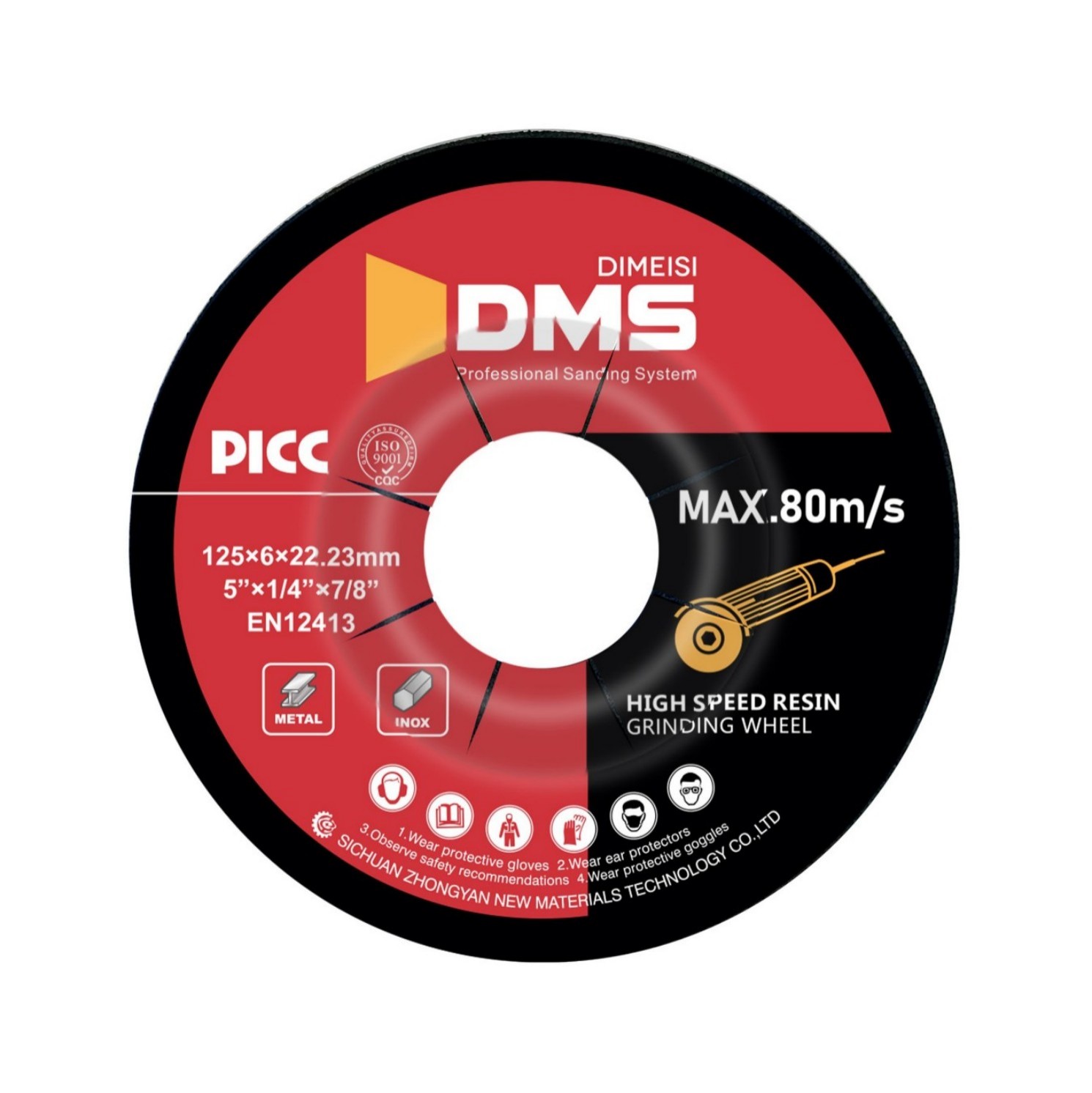
Resinoid Bond: Phenolic resin + fiberglass, flexible/shock-resistant, ideal for portable angle grinders (most common).
Vitrified Bond: Ceramic/glass-like, excellent shape retention/cool cutting, brittle (for precision machines only).
Metal Bond: Bronze/nickel matrix, extremely durable for heavy industrial use (high cost, needs special machines).
6. Grinding Disc vs. Flap Disc: Key Differences
Both attach to angle grinders but serve different purposes: grinding discs (rigid/aggressive) for bulk material removal; flap discs (layered/conforming) for smoother finishes. Choose based on speed vs. finish priority.
Key differences:
Structure: Grinding discs = solid bonded; flap discs = overlapping abrasive flaps.
Aggressiveness: Grinding = high (heavy stock removal); flap = moderate (blending/finishing).
Flexibility: Grinding = rigid; flap = conforms to contours/edges.
Finish: Grinding = rough; flap = smooth/satin.
Best Use: Grinding = welds/beveling; flap = blending/surface refinement.
Professionals use both in tandem: 36-grit grinding disc removes welds, 80-grit flap disc refines to a satin finish—balancing power and precision.
7. How a Grinding Disc Works
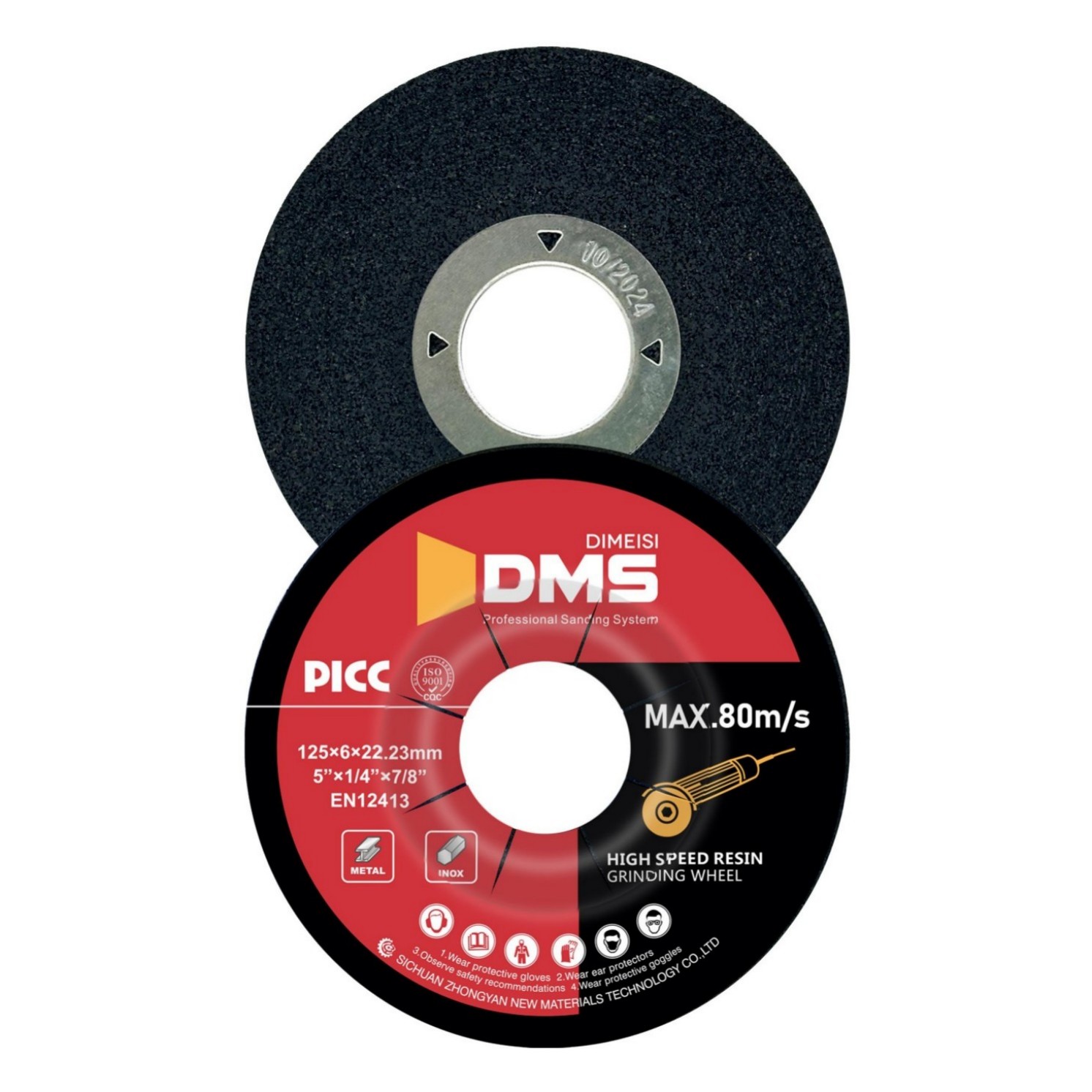
Grinding relies on tiny abrasive grains acting as cutting tools. Spinning at 8,000+ RPM, grains penetrate metal, shearing off micro-chips. Friction creates heat, controlled by speed/pressure/disc composition.
High-performance discs (zirconia/ceramic) self-sharpen: dull grains fracture to reveal new edges, maintaining consistency and extending life.
4 Stages of Grinding:
Initial Contact: Disc edge touches workpiece, starting material removal.
Active Cutting: Stable contact, continuous chip removal and sparks.
Thermal Control: 10–20° angle + steady motion dissipates heat, avoiding damage.
Wear Compensation: Adjust speed/pressure as disc wears to maintain contact.
Grinding is controlled material removal—precision is key. Understanding grain-metal interaction masters the skill.
8. Choosing the Right Grinding Disc
Choosing the right disc impacts productivity and quality. Wrong discs cause overheating/wear. Guide for common metals:
Mild Steel: Aluminum oxide, 24–46 grit, Type 27 disc (rough bright finish).
Stainless Steel: Zirconia/ceramic, 36–60 grit, Type 29 disc (semi-smooth for polishing).
Cast Iron: Silicon carbide, 24–36 grit, flat/cup wheel (clean matte finish).
Aluminum: Non-clogging silicon carbide, 60–120 grit, soft-bond disc (fine smooth finish).
Professionals also consider grinder power: industrial grinders use ceramic/zirconia; handheld tools use aluminum oxide for control.
9. Speed, Pressure, and Safety Control
Grinding performance/safety depend on RPM, pressure, and angle. Mismanagement causes uneven grinding or disc failure.
Optimal Speed, Angle, and Pressure Guidelines
4" (100 mm): 10,000–13,000 RPM, 10–15° angle, light-medium pressure.
4.5" (115 mm): 9,000–11,000 RPM, 15° angle, medium pressure.
5" (125 mm): 8,000–10,000 RPM, 15–20° angle, steady moderate pressure.
Excess speed risks disc rupture; too much pressure damages the disc/workpiece. Follow rated RPM, use light continuous pressure, and balanced movement.
Essential Safety:
Inspect discs for cracks before use—never use damaged ones.
Let the grinder reach full speed before contact.
Wear PPE: gloves, face shield, hearing protection, respirator.
Never grind with the disc side (unless designed for it).
Follow manufacturer’s RPM limits.
Pros develop a “feel” for optimal pressure/speed (via vibration, sound, sparks), combining skill with safety for quality grinding.