

In modern manufacturing, machining accuracy is determined by more than the performance of the machine itself. The abrasive used in grinding, sanding, polishing, and finishing can directly influence material removal rates, surface quality, production efficiency, and ultimately the consistency of the finished product.
As industries demand tighter tolerances and better surface finishes, abrasives are evolving from simple consumables into increasingly important process tools.
Industry forecasts suggest that the global industrial abrasives market could exceed USD 76 billion by 2033, with a compound annual growth rate of more than 5%. Behind this expansion is a broader transformation in manufacturing: companies are placing greater emphasis on precision, productivity, process stability, and total operating cost.
So, what is driving this change, and what does it mean for the future of abrasive products?

1. Advanced Manufacturing Is Creating New Abrasive Requirements
Growth in the abrasives industry is closely connected with the development of automotive, aerospace, electronics, metalworking, and other advanced manufacturing sectors.
Automotive Manufacturing
The transition toward electric vehicles and lightweight vehicle structures is changing the materials manufacturers need to process.
Aluminum alloys, high-strength steels, composites, coatings, and other lightweight materials require carefully selected abrasive solutions. Manufacturers are increasingly looking for abrasives that can provide fast material removal while maintaining consistent surface quality.
This trend is creating stronger demand for products such as abrasive discs, sanding film, flap discs, sanding sheets, and surface-finishing abrasives.
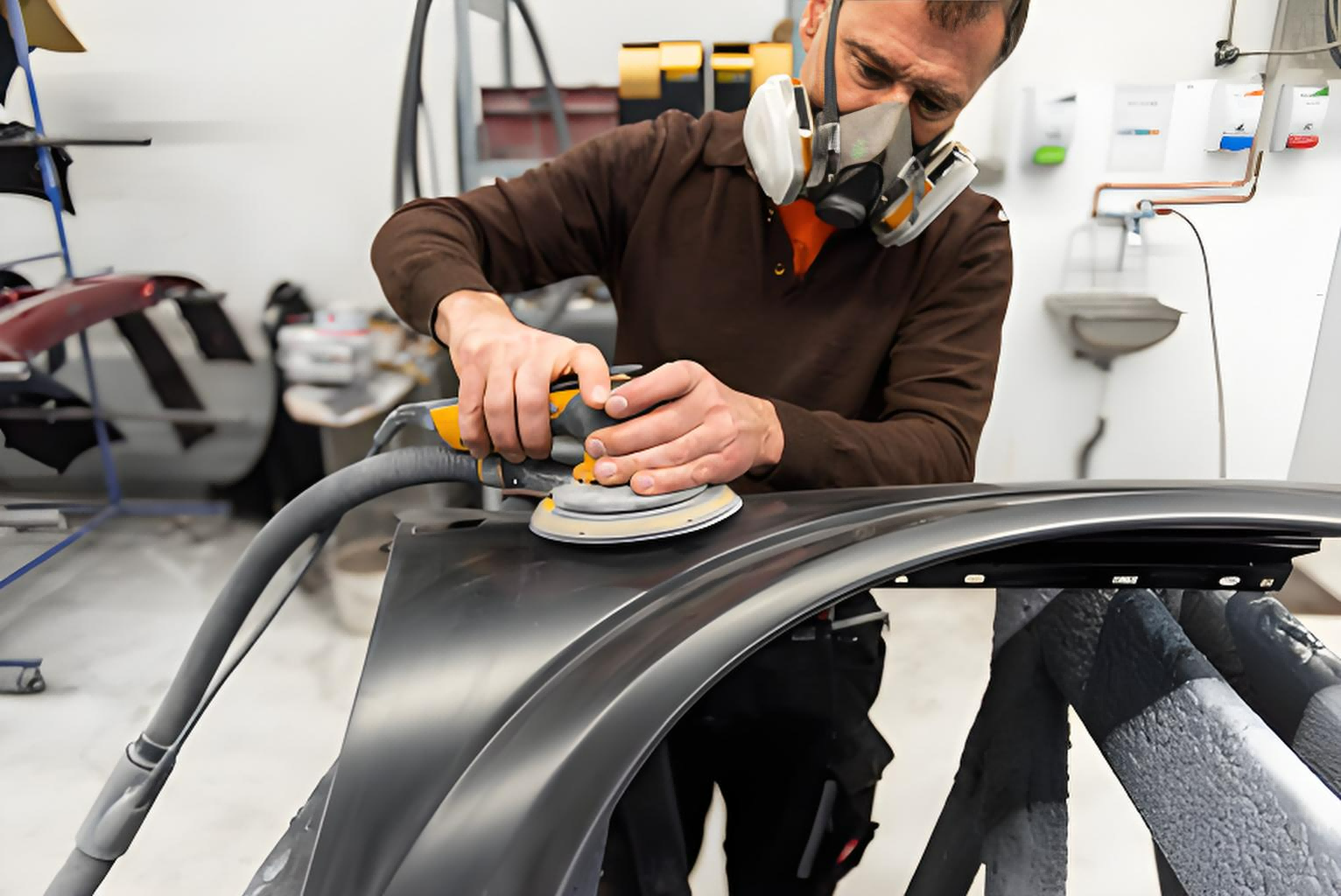
At ZY, we develop and manufacture a wide range of abrasive products for applications including automotive body repair, paint preparation, metal grinding, weld processing, surface blending, and finishing. Different abrasive grains, backing materials, hole patterns, and grit ranges can be selected according to specific processing requirements.
Electronics and Precision Manufacturing
As electronic components become smaller and more integrated, surface-processing requirements are becoming increasingly demanding.
Precision grinding and polishing processes must control scratches, dimensional accuracy, surface roughness, and material removal at extremely small scales. This is encouraging the development of finer and more consistent abrasive technologies.
Film-backed abrasives are particularly useful in applications requiring uniform abrasive distribution and consistent finishing performance.
ZY's abrasive film products are designed for fine sanding and finishing applications where surface consistency and controlled cutting performance are important.
Aerospace Manufacturing
Titanium alloys, nickel-based alloys, composites, and other difficult-to-machine materials are widely used in aerospace manufacturing.
Processing these materials requires abrasives capable of maintaining cutting efficiency under demanding conditions while controlling heat generation and tool wear.
As aerospace manufacturing continues to develop, high-performance abrasives will play an increasingly important role in grinding, deburring, blending, polishing, and surface preparation.
2. Manufacturers Are Looking Beyond Abrasive Price
One of the biggest changes in abrasive purchasing is the shift from focusing only on unit price toward evaluating total processing cost.
A cheaper abrasive does not necessarily reduce manufacturing costs.
Manufacturers increasingly evaluate factors such as:
Material removal rate
Abrasive life
Surface finish consistency
Changeover frequency
Labor efficiency
Machine downtime
Rework rate
Dust generation
Overall cost per workpiece
For example, an abrasive product with a higher initial cost may provide longer service life and faster grinding performance. If operators replace discs less frequently and complete each workpiece faster, the actual processing cost can be lower.
This is changing the role of abrasives in industrial production.
They are no longer viewed simply as disposable accessories. The correct abrasive can directly affect production speed, surface quality, labor costs, and manufacturing efficiency.
ZY focuses on balancing cutting performance, abrasive life, and finish quality across products such as flap discs, sanding discs, abrasive paper, sanding rolls, sanding sponges, mesh abrasives, and abrasive films.
3. Abrasive Technology Is Becoming More Engineered
Modern abrasive development is increasingly focused on controlling the entire abrasive structure rather than simply choosing a harder grain.
Advanced Abrasive Grains
Ceramic abrasives, synthetic diamond, CBN, silicon carbide, and advanced aluminum oxide grains continue to expand the performance limits of grinding and finishing.
For example, microcrystalline ceramic abrasives can continuously expose fresh cutting edges during grinding. This self-sharpening behavior helps maintain cutting performance and can improve abrasive life in demanding applications.
Better Abrasive Structure Design
The performance of an abrasive depends on much more than grit size.
Modern abrasive products can be engineered through careful control of:
Abrasive grain + backing material + bonding system + coating structure + hole pattern + product shape
Each factor influences how the abrasive behaves during use.
For sanding discs, for example, an optimized hole pattern can improve dust extraction. For abrasive film, a stable backing can support more consistent finishing. For flap discs, the abrasive grain, flap arrangement, backing plate, and density all influence grinding performance.
This engineering approach allows manufacturers to select abrasives according to specific materials, machines, speeds, and desired surface finishes.
ZY offers multiple abrasive configurations, including multi-hole sanding discs, hook-and-loop discs, PSA abrasives, abrasive film, mesh sanding discs, sanding rolls, sanding sheets, sanding sponges, and flap discs, helping customers match abrasive structures to different industrial applications.
4. Different Abrasive Products Will Continue to Develop Together
The abrasives market is not moving toward one universal product. Instead, different abrasive technologies are becoming increasingly specialized.
Bonded abrasives remain essential for precision grinding, cutting, sharpening, and other applications requiring rigidity and dimensional control.
Coated abrasives provide greater flexibility and are widely used for metalworking, woodworking, automotive refinishing, surface preparation, and general industrial sanding.
Superabrasives, including diamond and CBN products, represent a smaller portion of overall abrasive consumption but offer high technical value in demanding precision applications.
Flexible abrasives are also becoming increasingly specialized.
For example, ZY supplies several abrasive formats for different surface-processing requirements:
Flap discs for grinding, weld blending, deburring, and surface preparation
Sanding discs for automotive, metal, wood, and coating applications
Abrasive film for controlled fine sanding and finishing
Mesh sanding discs for improved dust extraction
Sanding sheets and rolls for manual and machine sanding
Sanding sponges for contours, edges, profiles, and irregular surfaces
Rather than replacing one another, these products solve different stages of the manufacturing and finishing process.
5. Automotive and Metalworking Remain Major Markets
Automotive manufacturing continues to be one of the most important application areas for industrial abrasives.
Traditional vehicles require grinding and finishing for engine components, transmissions, body panels, welds, coatings, and repair processes. Electric vehicles add new applications involving motors, battery housings, aluminum structures, and lightweight components.
Metal fabrication is another major market.
From weld removal and deburring to rust removal, surface blending, paint preparation, and final finishing, abrasives are used throughout the production process.
This is why products such as flap discs and sanding discs remain essential tools in fabrication workshops and industrial production lines.
ZY develops abrasive solutions for both aggressive material removal and controlled surface finishing, allowing customers to choose suitable grit sizes and abrasive structures according to their production requirements.
6. Global Abrasive Demand Is Becoming More Diverse
The development of the global abrasives market is closely linked to regional manufacturing capabilities.
The United States continues to generate strong demand from aerospace, automotive, metal fabrication, and advanced manufacturing.
China remains one of the world's largest manufacturing bases, supporting significant consumption and production of industrial abrasive products.
Germany maintains strong demand for premium abrasives due to its automotive, machinery, engineering, and precision manufacturing industries.
Meanwhile, emerging manufacturing markets, including India, Southeast Asia, Latin America, and other regions, are creating new opportunities as industrial production and infrastructure investment expand.
For abrasive manufacturers, this means customers are becoming increasingly diverse. Different regions require different product specifications, price-performance levels, packaging formats, and customized solutions.
As an abrasive manufacturer, ZY supports OEM and customized abrasive solutions, including different sizes, grit ranges, hole configurations, backing materials, packaging options, and product specifications for international customers.
7. The Future: Smarter, Cleaner and More Efficient Abrasives
Looking ahead, two trends are likely to influence the next stage of abrasive development.
Integration With Smart Manufacturing
Grinding and sanding processes are becoming increasingly data-driven.
Future abrasive systems may work more closely with sensors, automated equipment, robotic grinding systems, and process-monitoring technologies. Instead of replacing abrasives only after visible wear, manufacturers may increasingly predict abrasive condition based on operating data.
This could improve process consistency while reducing unnecessary downtime.
Sustainable Abrasive Solutions
Environmental performance is also becoming increasingly important.
Manufacturers are looking for abrasive solutions that can:
Last longer
Reduce abrasive consumption
Improve dust collection
Reduce energy consumption
Lower material waste
Reduce rework
Improve overall process efficiency
Dust-control products such as multi-hole sanding discs and mesh abrasives are one example of how abrasive design is evolving beyond cutting performance alone.
ZY continues to develop abrasive products that combine cutting efficiency, durability, surface quality, and practical manufacturing economics.
Conclusion
The projected expansion of the global abrasives market toward USD 76 billion represents more than simple growth in abrasive consumption.
It reflects a deeper transformation in manufacturing.
As automotive, aerospace, electronics, metalworking, and other industries pursue greater precision and efficiency, abrasive products are becoming increasingly specialized and engineered.
The future of abrasives will therefore not be defined simply by which product removes material the fastest. The real competition will be about achieving the best balance between material removal rate, surface quality, abrasive life, dust control, process stability, and total manufacturing cost.
For manufacturers, choosing the right abrasive is becoming an increasingly important part of optimizing the entire production process.
ZY provides a broad range of abrasive solutions, including flap discs, sanding discs, abrasive paper, abrasive film, sanding rolls, mesh abrasives, and sanding sponges. With flexible specifications and OEM customization capabilities, ZY helps industrial customers select abrasive solutions for different materials, applications, and surface-finishing requirements.