

When choosing a sanding sponge for cars, automotive technicians usually care about more than just the grit size. The quality of the abrasive bond and the resilience of the sponge itself can have a major impact on sanding performance.
A sanding sponge with poor abrasive adhesion may lose its grains after only a few uses, while a low-quality sponge can quickly become compressed, soft, or permanently deformed. These problems can reduce sanding efficiency and make it more difficult to achieve a smooth and consistent automotive finish.
The good news is that you don't always need professional laboratory equipment to make a basic quality assessment. With several simple tests, you can quickly get an idea of whether a sanding sponge for cars has sufficient bonding strength and resilience.

1. Check Abrasive Bond Strength by Scraping
One of the easiest ways to check abrasive adhesion is the fingernail scraping test.
Run your fingernail gently back and forth across the edge of the abrasive surface several times. Pay attention to whether the abrasive grains remain firmly attached.
If a large number of particles come loose easily, or you can feel the grains moving or slipping under your fingernail, the bonding between the abrasive and sponge may not be strong enough.
For automotive sanding applications, weak abrasive adhesion can lead to excessive grain loss during use. Loose abrasive particles may also interfere with the sanding process and potentially affect the quality of the painted surface.
This simple test only takes a few seconds and can help identify obvious bonding problems before the sanding sponge is put into regular use.
2. Fold the Sponge to Simulate Actual Sanding
A second quick method is to fold the sanding sponge in half so that the abrasive surfaces come into contact with each other.
Gently rub the two abrasive surfaces together several times and check the amount of abrasive dust or particles released.
A well-made sanding sponge for cars may produce a small amount of fine powder during this test, but the abrasive layer should remain substantially intact. If large particles fall away or the sponge base becomes visible, the abrasive bonding may be insufficient.
This test is particularly useful because sanding sponges are often bent and compressed when working around curved automotive panels, edges, and contours. The repeated friction between the abrasive surfaces can therefore provide a quick indication of how stable the abrasive layer is under mechanical stress.
3. Test Sponge Resilience with a Simple Press
Bond strength is only one part of sanding sponge quality. The resilience of the foam backing is equally important.
To test it, place the sponge on a flat surface and press firmly on its center with your finger. Hold the pressure for several seconds, then release it.
Observe how quickly the sponge returns to its original thickness.
A high-quality sponge should recover relatively quickly and leave little or no permanent indentation. Good resilience allows the sponge to maintain consistent contact with curved surfaces and helps distribute sanding pressure more evenly.
If the sponge returns very slowly or remains visibly compressed, its internal structure may not provide sufficient support. During sanding, this can cause the sponge to deform and concentrate pressure on specific areas, making it harder to achieve a uniform finish.
4. Perform a Repeated Compression Test
A single press doesn't always reveal how a sanding sponge will perform after extended use. For a more practical evaluation, repeatedly press the same area around 10–15 times.
After repeated compression, check whether the sponge:
Maintains its original thickness
Recovers its shape quickly
Becomes noticeably softer
Develops permanent dents
Shows signs of structural breakdown
Some low-quality sanding sponges for cars can lose their elasticity surprisingly quickly after repeated compression. This problem can become more obvious during wet sanding or in relatively warm working environments.
A sponge that maintains its elasticity after repeated compression is generally better suited for longer sanding sessions.
5. Evaluate Bonding and Resilience Together
Rather than checking abrasive adhesion and sponge resilience separately, it is more useful to consider both properties together.
A reliable sanding sponge for cars should maintain a stable abrasive layer while the sponge body continues to provide consistent support.
After folding, rubbing, and pressing, there should be no obvious widespread abrasive loss, while the sponge should retain most of its original thickness and elasticity.
This combination is important for automotive refinishing because technicians frequently work on curved panels, contours, edges, and other surfaces where both abrasive stability and flexible support are required.
How ZY Focuses on Sanding Sponge Quality
At ZY, quality control for sanding sponges focuses on both the abrasive bonding system and the physical performance of the sponge substrate.
The bonding process is designed to provide stable adhesion between the abrasive grains and sponge base during repeated sanding. At the same time, the density and elasticity of the sponge material are carefully controlled to help the product maintain its shape and support when working on automotive curves and edges.
Through process optimization and repeated performance testing, ZY aims to provide sanding sponges that deliver consistent cutting performance, reliable flexibility, and stable durability for automotive refinishing applications.
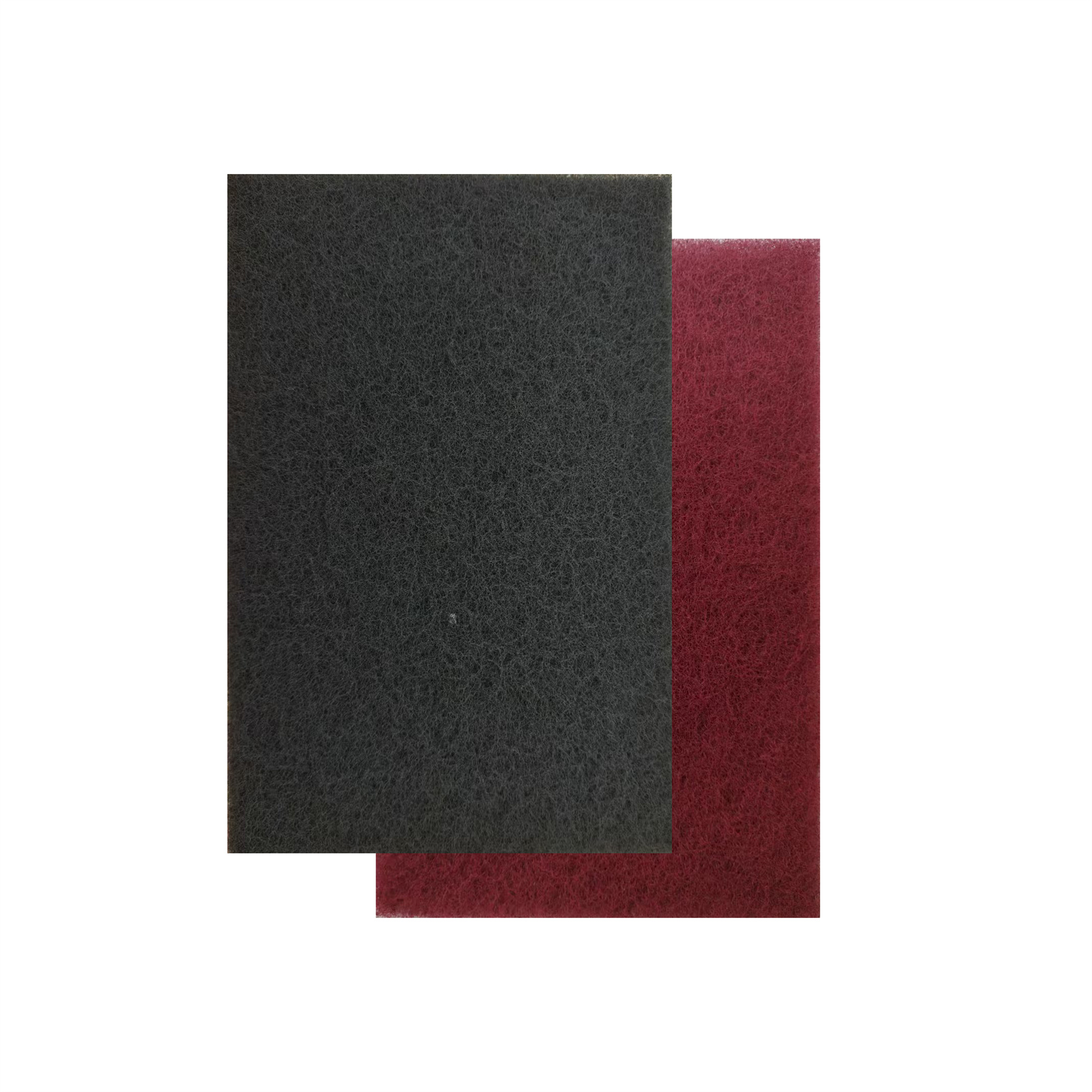
A Simple Test Before You Start Sanding
You don't necessarily need complicated equipment to perform a preliminary quality check.
Before using a new sanding sponge for cars, try these four simple steps:
Scrape → Fold → Press → Sand
First, scrape the abrasive surface gently to check the bond. Then fold and rub the sponge to observe abrasive shedding. Press the sponge repeatedly to evaluate its resilience. Finally, make a few test passes on a scrap piece of sheet metal and check whether the abrasive remains stable and the sponge maintains its shape.
These simple checks can help you quickly identify obvious quality issues before using the sanding sponge on an actual vehicle.
For automotive refinishing professionals, choosing a sanding sponge with strong abrasive bonding, good resilience, and consistent performance can make sanding more efficient while helping achieve a smoother and more uniform surface finish.