

Driven by global construction expansion, industrial development and rising demand for precision surface finishing, the global abrasives market was valued at $49–52 billion in 2025. As a key modern abrasive consumable, net abrasive mesh will see stable growth from 2026 to 2031, serving construction, automotive, woodworking, metal processing and precision manufacturing sectors. This article summarizes the market status, core applications, growth drivers and key industry trends of global net abrasive mesh.
Coated abrasives rank among the fastest-growing abrasive segments, fueled by global construction, infrastructure and automotive refinishing demand. Ceramic grain, the core raw material for high-end net abrasive mesh, is projected to reach a $6.8 billion market size by 2032 with a 5.8% CAGR, reflecting strong upstream growth momentum for high-performance abrasive materials.
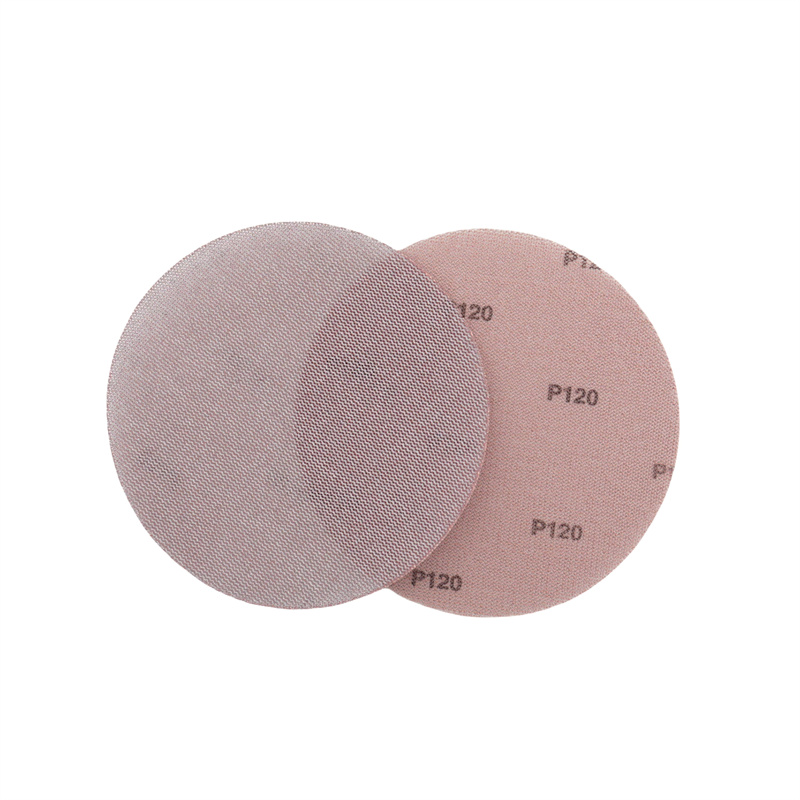
1. Classification and Market Performance of Net Abrasive Mesh Products
Net abrasive meshes vary in grain material, mesh structure and grit size, with customized products for diverse industrial and professional sanding scenarios.
Ceramic net abrasive mesh is the market’s fastest-growing product type and a top choice for global industrial users. Its self-sharpening property, stable cutting power and excellent durability under heavy loads outperform traditional abrasive mesh products significantly.
2. Core Application Fields and Downstream End Markets
Featuring a unique open-mesh structure, net abrasive mesh solves traditional sandpaper’s clogging, short lifespan and excessive dust issues. It delivers dust-free sanding, long service life and consistent finishing, covering civil decoration, industrial manufacturing and precision processing scenarios. Its key applications include construction drywall sanding, automotive refinishing, woodworking and furniture polishing, metal surface deburring, interior renovation, as well as high-precision finishing for aerospace and mechanical components. Notably, the automotive sector accounts for 42% of Asia-Pacific’s abrasive demand, serving as a pivotal downstream market.
Featuring a unique open-mesh structure, net abrasive mesh solves traditional sandpaper’s clogging, short lifespan and excessive dust issues. It delivers dust-free sanding, long service life and consistent finishing, covering both civil and industrial applications as detailed below:
3. Core Growth Drivers of the Global Net Abrasive Mesh Market
The steady expansion of the global net abrasive mesh market is driven by multiple synergistic factors. First, booming urbanization and infrastructure construction in Asia, the Middle East and Africa generate continuous demand for construction and wall-finishing abrasives. Second, net abrasive mesh boasts obvious performance advantages over traditional sandpaper in dust control, anti-clogging and durability, prompting widespread product replacement and industrial upgrading. Third, increasingly stringent global occupational health and environmental regulations push the adoption of dust-free sanding solutions, where mesh abrasives are perfectly compatible with vacuum dust collection systems. Fourth, the popularization of corded and cordless automatic polishing equipment greatly boosts demand for matching hook-and-loop net abrasive products. Finally, large-scale renovation of aging buildings in Europe and North America further expands the market for heavy-duty abrasive consumables.
Rapid urbanization in Asia, the Middle East and Africa drives massive infrastructure and residential construction, fueling steady demand for net abrasive mesh, especially drywall sanding products.

4. 2026–2031 Industry Trends and Future Market Outlook
The global net abrasive mesh industry will witness six major developmental trends in the next five years. Firstly, ceramic abrasive technology will become mainstream; ceramic mesh is evolving from a high-end niche product to a mainstream option, with its self-sharpening, high-durability properties lowering users’ overall usage costs. Secondly, dust-free sanding solutions are becoming industry standards, driven by EU and North American safety and emission regulations. Thirdly, the explosive growth of cordless lithium-ion polishing tools will continuously drive demand for hook-and-loop net abrasives globally. Fourthly, eco-friendly, sustainable abrasive products with recycled materials and low-carbon processes are gaining increasing market favor, especially in European high-end B2B markets. Fifthly, digital B2B procurement is reshaping the industry supply chain, bringing new opportunities for direct sales-oriented manufacturers. Sixthly, the Middle East and Africa will emerge as the fastest-growing markets, with massive infrastructure investment creating huge export potential for abrasive mesh suppliers.
Ceramic net abrasive mesh is shifting from a niche premium product to mainstream industrial gear. With the ceramic abrasive market set to hit $6.8 billion by 2032, self-sharpening ceramic alumina grains deliver far higher efficiency and durability than traditional alumina. User focus on total cost of ownership will further boost its adoption through 2031.
5. Overall Market Prospect
Backed by downstream demand, product upgrading, environmental regulations and emerging market expansion, the global net abrasive mesh market will maintain steady growth from 2026 to 2031. Ceramic technology popularization, dust-free solutions and digital sales will dominate industry development, with high-performance, green and diversified product suppliers leading market competition.